
Beginner Level

Cybersecurity Fundamentals Course

A beginner-friendly foundation course covering security concepts, networking, Linux, ethical hacking, vulnerability assessment, web security, SOC, cloud security, incident response, cyber laws, and career pathways.

20 HoursBeginner LevelClassroom / Online / Hybrid
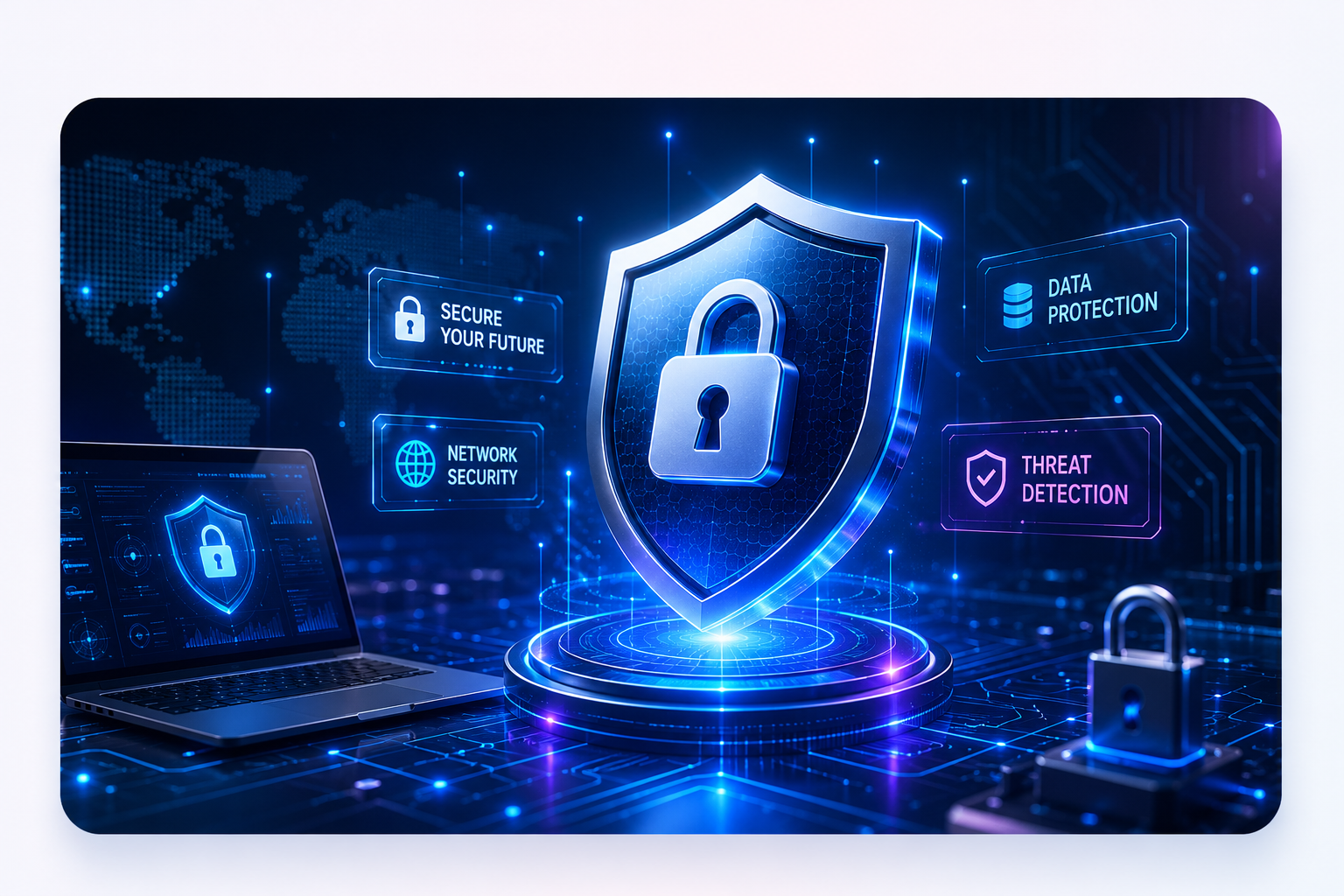
Cybersecurity shield showing data protection, network security and threat detection
Course overview

Build your cybersecurity foundation with guided fundamentals

This Cybersecurity Fundamentals course introduces learners to the essential concepts of cybersecurity, computer systems, networking, Linux, ethical hacking, vulnerability assessment, web security, SOC operations, cloud security, incident response, cyber laws, and career pathways.

The course is designed for beginners and includes concept-based learning, practical demonstrations, real-world examples, and guided activities that prepare learners for advanced cybersecurity training.

Ideal for

  • Students and fresh graduates
  • IT beginners
  • Helpdesk and technical support professionals
  • Networking learners
  • Anyone planning to start a cybersecurity career

Course snapshot

Total learning20 hours
LevelBeginner
Training modeClassroom / Online / Hybrid
Learning styleConcept learning, practical demonstrations, real-world examples, and guided activities
CertificateCourse completion certificate subject to successful completion
Learning outcomes

What learners will understand

By the end of the course, learners should be able to explain core security concepts and prepare for advanced cybersecurity pathways.

01

Security foundations

Understand the cybersecurity threat landscape, key security roles, cyber laws, ethics, and responsible behavior.

02

Systems and networks

Explain basic computer, operating system, networking, Linux, password, access control, and cloud security concepts.

03

Practical awareness

Identify malware, phishing, web risks, vulnerabilities, SOC alerts, incident response workflows, and career next steps.

20-hour curriculum

Module-wise learning plan

Each module introduces practical cybersecurity concepts through simple explanations, demonstrations, and safe guided activities.

Module 01
Introduction to Cybersecurity

Cybersecurity basics, digital-world importance, threat landscape, CIA Triad, domains, job roles, ethics, legality, responsible behavior, and career pathways.

Module 02
Computer, OS and Linux Fundamentals

Hardware, software, operating systems, Windows overview, Linux use cases, terminal basics, files, directories, permissions, users, processes, and essential beginner commands.

Module 03
Networking Fundamentals

Networks, LAN, WAN, internet, devices, IP addressing, subnet basics, DNS, DHCP, TCP, UDP, common ports, protocols, firewalls, VPNs, and packet flow.

Module 04
Threats, Malware and Phishing

Cyber threats, malware, ransomware, spyware, trojans, worms, phishing, social engineering, indicators of compromise, safe browsing, email security, and malware safety precautions.

Module 05
Identity, Passwords and Access Control

Authentication, authorization, password security, multi-factor authentication, access control models, least privilege, and account security best practices.

Module 06
Ethical Hacking Fundamentals

Ethical hacking basics, hacking versus ethical hacking, authorization, scope, rules of engagement, reconnaissance, passive and active information gathering, responsible disclosure, and legal boundaries.

Module 07
Vulnerability Assessment Basics

Vulnerabilities, vulnerability assessment versus penetration testing, scanning concepts, risk rating, prioritization, false positives, validation, reporting, and remediation basics.

Module 08
Web Application Security and OWASP

How web applications work, client-server-database basics, common web risks, OWASP Top 10 overview, authentication flaws, injection basics, broken access control, and security misconfiguration.

Module 09
Network, Wi-Fi, SOC and SIEM Fundamentals

Network security basics, secure configuration, segmentation, Wi-Fi security, logs, monitoring, SOC, SIEM, alert triage, and incident workflow overview.

Module 10
Cloud Security, Incident Response, Cyber Laws and Career Roadmap

Cloud basics, shared responsibility, cloud identity and access controls, incident response lifecycle, digital evidence, reporting basics, cyber laws, final assessment, mini project discussion, and career planning.

Assessment and certification

Complete checks, demos and final assessment

Learners complete module-wise knowledge checks, practical demonstrations, a final assessment, and a mini project or case study discussion. After successful completion, participants may receive a Course Completion Certificate in Cybersecurity Fundamentals.

Suggested mini project

Basic Cybersecurity Risk Assessment Report

Learners review a sample system or small network scenario and prepare a beginner-level report covering identified risks, possible vulnerabilities, recommended security controls, safe password and access practices, and incident response suggestions.

Course benefits

A strong start for advanced cybersecurity learning

01

Beginner friendly

Designed for learners starting from the fundamentals.

02

Broad coverage

Covers technical and non-technical security concepts.

03

Practical exposure

Includes networking, Linux, ethical hacking, SOC, cloud, and incident response basics.

04

Next-step ready

Helps learners prepare for ethical hacking, SOC analysis, VAPT, cloud security, and digital forensics.

All practical activities must be performed only within an authorised Layeron lab or a system for which written permission has been provided. Testing external websites, networks or devices without permission is prohibited.